- Solo Exhibitions
- 1970 – Orangerie Glücksburg, Germany
- 2004 –Four Solo Shows, Flensburg, Germany
- 2008 – Pueblo Español (two shows), Palma de Mallorca, Spain2013
- 2009 – Galerie von Negelein Kiel
- 2011 – Akadmie Sankelmark Oversee
- 2012 – EAGL Galerie Berlin
- 2013 – Borey Art Center, St. Petersburg, Russia one video more
- 2013– Space Art Gallery London, one video more
- 2014 – 1462 Contemporary Art Gallery, Izmir, Turkey
- 2017 – Kunsthaus Heide, Germany
- 2017 – Kunsthaus Burg SH
- 2017 – Galerie 149, Bremerhaven, Germany
- 2018 – FPeins Gallery, Cologne, Germany
- 2019 – Artinnovation, Innsbruck, Austria
- 2019 – Contemporary Art Gallery, Handewitt, Germany
- 2021 – Oskar and Friends Art Gallery Danmark
- 2022 – Solo Exhibition Ajuntamente Santany
- 2024 – Solo Exhibition Galerie Vision24 Palma
- 2025 – Open House Mallorca
- Exhibitions & Collections – Ausstellungen und Sammlungen
- 2008 – Vernissage in der Fundación Matthias Kühn im Pueblo Español in Palma de Mallorca Februar 2008
- 2013–2015 – The Voynich Project, internationale Wanderausstellung mit 20 Künstlern
- 2014 – Berliner Liste, Berlin
- 2014 – Jaipur Art Exhibition, Indien
- 2015 – Kölner Liste, Köln
- 2015 – Museum of Contemporary Art (MOCA), Beijing, China
- 2015 – Berliner Liste, Berlin
- 2015 – Pashmin Art Gallery, Hamburg
- 2015 – Jenseits von Gut und Böse Pashmin Hamburg
- 2016 – Cosmo Grafie Roma
- 2016 – SCOPE New York, USA
- 2018 – ARTe Sindelfingen, Deutschland
- 2018 – ARTMUC, München, Deutschland
- 2019 – Art Innsbruck, Österreich
- 2019 – International Art Fair Shanghai, China
- 2020 – UNESCO AIAIP Human Rights, Women Can Save the World, Italien
- 2020 – Galerie Ludwig Trossaert (Online)
- 2022 – Barcelona
- 2022–2025 – Collective Exhibitions, Palma de Mallorca, Spanien
- (u. a. gemeinsam mit Joan Bennàssar, Christian Awe und Künstlern der Kinsky
- Collection)
- 2024 – Artshow Kotor Montenegro. Thanks Daliborka Kordić
- 2025- At Kinsky Art & Living – THESPRING2025 – Kim Konrad & Reinhard Stammer and one video more and one video more
- 2026 Hub Art Gallery Barcelona
- Sammlungen (Collections)
- The Kinsky Collection of Contemporary Art, Mallorca, Spanien one video more, and one video more and one video more
- Private Sammlungen/private Collections in Deutschland, Österreich, Schweiz,
- Spanien, Großbritannien und China
- Medien (News & Media)
- Publikationen (Publications)
- 2014 – Berliner Zeitung von/by Ingeborg Ruthe
- 2017 – Nordostseezeitung von/by Ulrich Müller
- 2018 – Internationale Kunst Heute, von/by Ingrid Gordill
- 2017 – eXperimenta 05/17 Fünftklässler, Germany
- 2018 – Janis Kirstein
- 2019 – Dr. Axel Feuß, Laudatio, “Stadtgalerie Handewitt”, Germany
- 2020 – Monaco Lifestyle Magazine Nr. 8
- 2020 – Jens Philipp Gründler
- 2020 – Artery NYC (USA) Interview “Spotlight”
- 2022 – Collectors Choice by Janis Kirstein
- – Uwe Lempelius, Laudatio, “pure energy 4”, Germany
- 2022 – Some of my Artworks Vol. I & Vol. II 1968-2021
- 2025 – Whatever it means, hommage by Jan Kowalczuk
- Kritik (critique)
- 2025 – Great Artists of Mallorca by Axel Ruske
- 2025 – The Kinsky Collection of Contemporary Art, Mallorca, Spanien cat. VII one video more
Medien (News & Media)
- 2012 – Berliner Zeitung von/by Ingeborg Ruthe
- 2017 – eXperimenta 05/17 Fünftklässler, Germany
- 2017 – Nordostseezeitung von/by Ulrich Müller Publikationen (Publications)
- 2018 – Internationale Kunst Heute, von/by Ingrid Gordill
- 2018 – Mallorca Ambiente
- 2019 –Dr. Axel Feuß, Laudatio, “Stadtgalerie Handewitt”, Germany
- 2020 – Monaco Lifestyle Magazine Nr. 8
- 2025 – The Kinsky Collection of Contemporary Art, Mallorca, Spanien cat. VII
- 2025 – Great Artists of Mallorca by Axel Ruske
With Friends
2024 -With Monolo Oyonarte Video of my visit in Madrid
TV
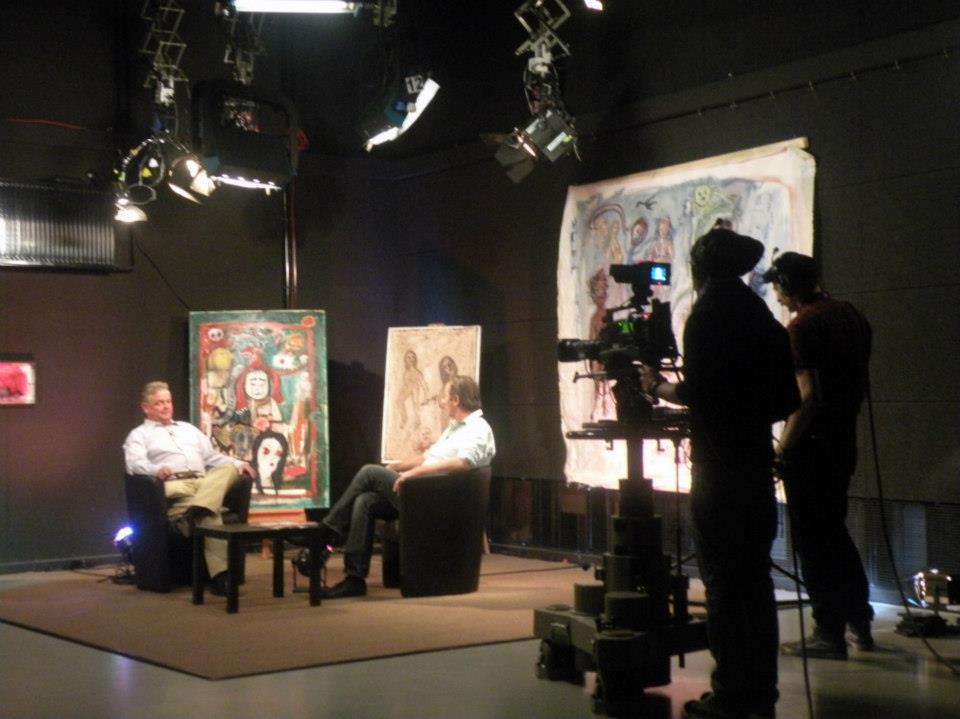
2013 Was kunst du? Mit Cosmo Du Mont
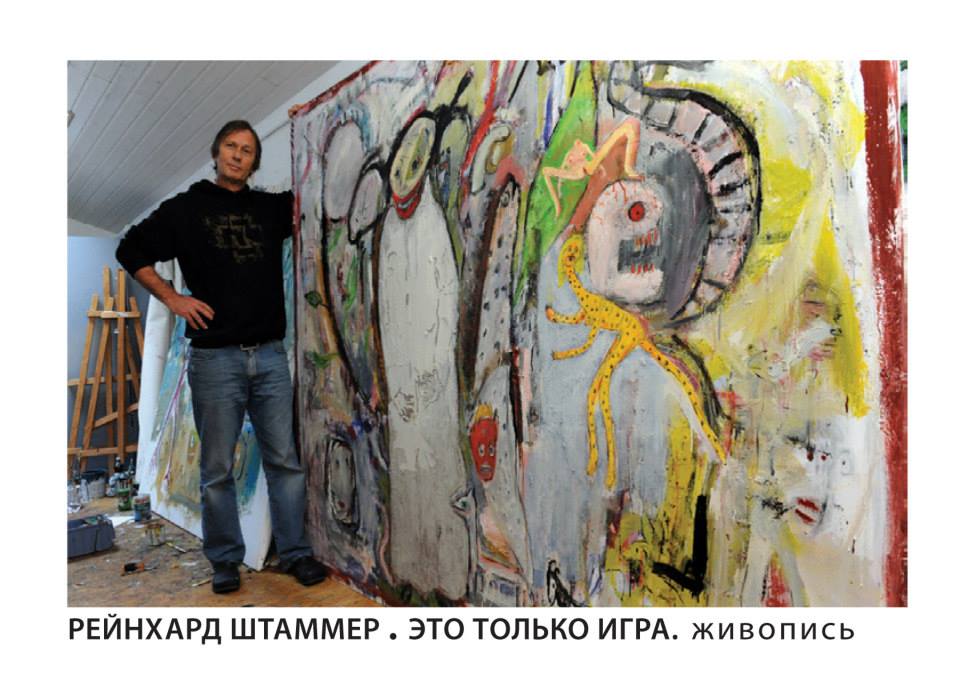
2013 – Borey Art Center, St. Petersburg, Russia
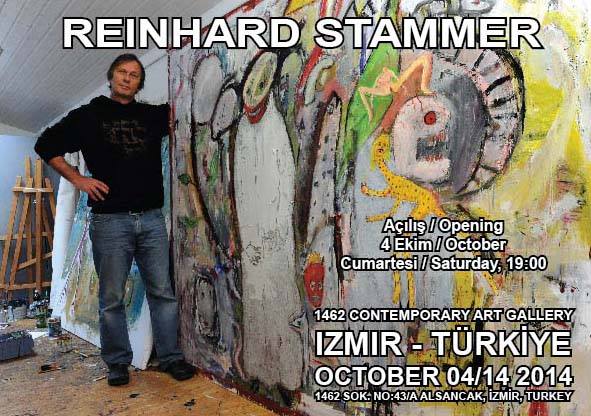
2014 Türkei 1492 Contemporary Art Gallery
Art Critics
Jens Philipp Gründler
Kurzbiographie
Geboren 1977 in Bielefeld, studierte Philosophie in Münster, Westfalen. 2015 erschienen die Kurzgeschichtensammlungen „Glaspyramide“ und „Flüssige Schwerter“ sowie der Roman „Rebellen des Lichts“. Seit 2016 betätigt er sich als Redakteur der Zeitschrift „Experimenta“. Zuletzt wurde der Erzählband „Seelenportal“ publiziert. „Einst gemarterte Heilige“, ein Roman, und die Erzählungssammlungen „Alles steht still“ und „Das Schweigen der Gedanken“ werden zurzeit für die Veröffentlichung vorbereitet.
Die Kraft der Malerei
Ein Portrait des Künstlers Reinhard Stammer von Jens Philipp Gründler
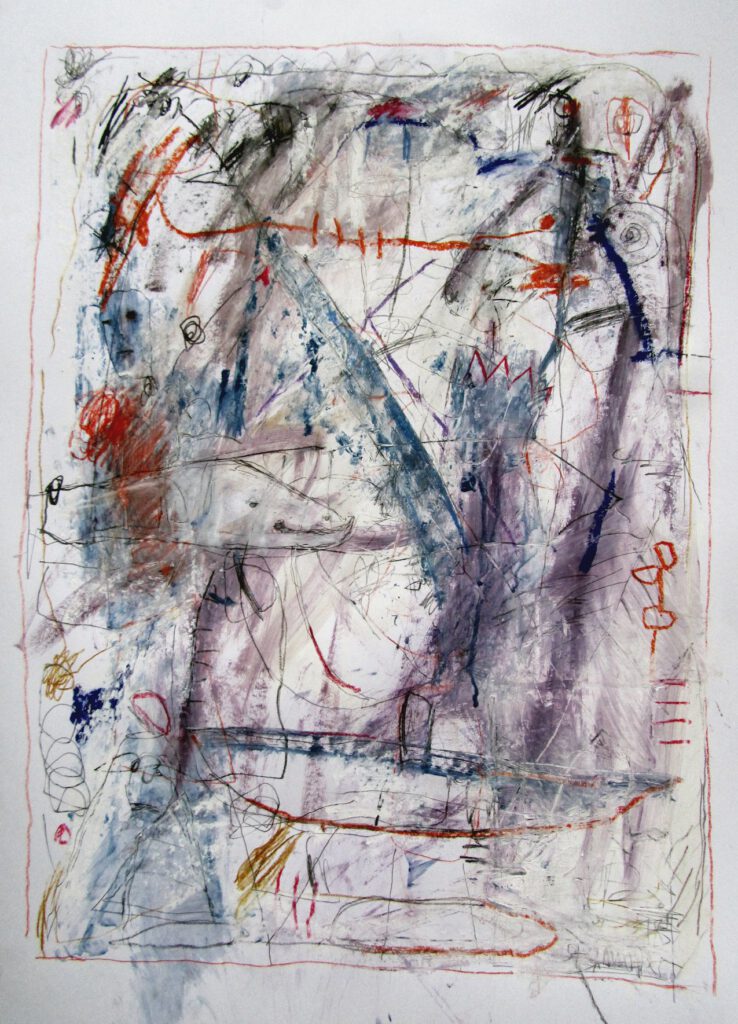
„Whatever it means“ by Jan Kowalczuk
Reinhard Stammer’s painting “Whatever It Means” and the concept of “democracy in
Harmolodics” share an underlying philosophical kinship: both operate through openness,
multiplicity, and the dissolution of hierarchical control. Yet, they arise from distinct worlds—
visual abstraction versus musical philosophy.
“Whatever It Means” embodies Reinhard’s complexity of a “mature” style: a layered, abstract
composition driven by impulse, energy, and transformation. His works often emerge from
chaotically applied colors, brushstrokes, and textures that resolve (if only temporarily) into
visual harmony. Reinhard’s aesthetic rejects strict interpretation; he invites viewers to project
meaning inwardly, emphasizing process over product. This aligns with his broader philosophy
that art is a dialogue between chaos and clarity, a constant negotiation between emotion and
structure.
In “Whatever It Means”, the title itself displaces authority from the artist to the audience.
Meaning is not dictated but co-created. This decentralization mirrors his belief that artistic
expression is a democratic field where emotion, intuition, and material all have equal agency. A
stance reminiscent of postmodern anti-authoritarian tendencies.
Harmolodics, the musical philosophy developed by jazz innovator Ornette Coleman, proposes
that harmony, melody, and rhythm coexist on equal terms. No one element dominates; all voices
are autonomous yet interact in real time. “Democracy in Harmolodics” thus refers to a form of
musical equality where every player’s expression carries the same weight—a flattening of
hierarchies within composition and improvisation.
Rather than linear progression or centralised control, Harmolodics celebrates simultaneity,
freedom, and listening. It is a sonic republic where the interplay of differences produces
coherence—without a single, defining center.
Comparison of the Reinhard Stammer’s “Whatever It Means” vs concept of Democracy in
Harmolodics
Medium
Abstract painting vs Musical philosophy (jazz)
Core principle
Decentralized meaning (viewer co-creates interpretation) vs Equal voice among musical
elements and performers
Structure
Dynamic interplay of chaos and balance vs Polyphonic interaction without hierarchy
Role of individual
Artist as facilitator, not dictator vs Musician as autonomous participant
Process philosophy
Transformation through contradiction vs Freedom through collective improvisation
Outcome
Open-ended, emotional resonance vs Collective equilibrium in sound
Shared essence
Both frameworks reject authoritarian structure and celebrate pluralism. Stammer’s brushwork
and Coleman’s Harmolodic tones are improvisational, resisting closure. In both, disorder
becomes not a breakdown but a generator of meaning—an emergent order formed through
interaction rather than control.
Thus, “Whatever It Means” and democracy in Harmolodics converge as expressions of radical
freedom: they both affirm that truth, beauty, and coherence can arise from the mutual respect
of independent voices, each shaping a living whole
About Jan Kowalczuk
Jan Kowalczuk is a Copenhagen-based jazz theorist and cultural commentator
whose work explores the intersections of sound, structure, and improvisation in
modern art. His reflections connect Ornette Coleman’s Harmolodic philosophy
with broader artistic practices that dissolve hierarchy and invite participatory
meaning-making. By curating Reinhard Stammer’s “Whatever It Means” through
the lens of Democracy in Harmolodics, Kowalczuk bridges contemporary visual
abstraction with the intellectual legacy of free jazz — situating Stammer’s work
within a lineage of artists who treat creation as a living, egalitarian dialogue
between chaos and order.
2018 Kritik von Janis Kirstein
The bold work of Reinhard Stammer by Janis Kirstein

About Janis Kirstein
Janis Kirstein is an American contemporary artist and writer
based in Louisville, Kentucky.
Trained in painting and mixed media, her work explores the
subconscious through layered textures and symbolic
abstraction.
She is the founder of Kirstein Fine Art, where she curates and
writes about artists who blur the boundaries between intuition
and expression
2025 – Great Artists of Mallorca by Axel Ruske
More reviews are linked under Exhibitions
Mehr Kritiken sind unter Ausstellungen verlinkt